
April's Story
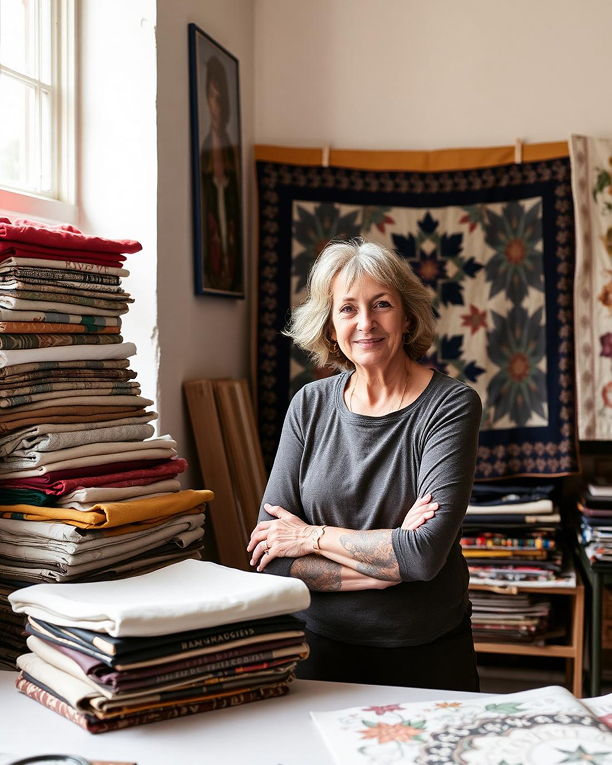
The Heart Behind the Quilts
Three parts of every piece
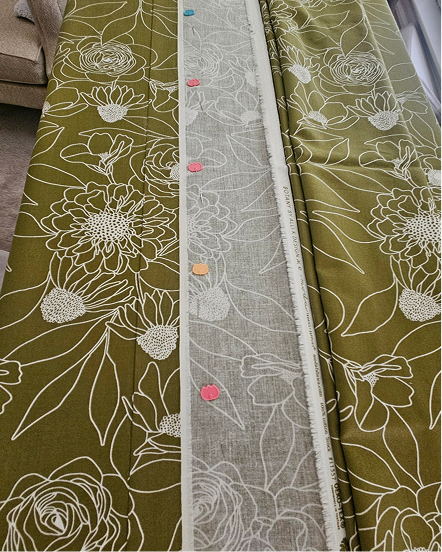
One — Selecting Fabrics
I rarely begin with a drawing. I begin with a fabric — usually one I've been carrying around for a while, folded on the corner of the table, waiting for the rest of the piece to catch up to it.
I look for cloth that has already lived a little: washed linen with an uneven hand, cottons that have softened, a length of indigo whose dye has moved. Colour matters, but texture is what decides. If a fabric doesn't change in the light through the day, it usually doesn't make it into a composition.
Two — Designing the Composition
Everything is worked out on the design wall, in full size. Pieces go up, come down, move an inch to the left, come down again. Some compositions settle in an afternoon; most take weeks of walking past them.
I don't sketch a plan and execute it. The arrangement is a record of the decisions as they actually happened — which is why the balance in a finished piece never feels symmetrical, only resolved.
Three — Hand Construction
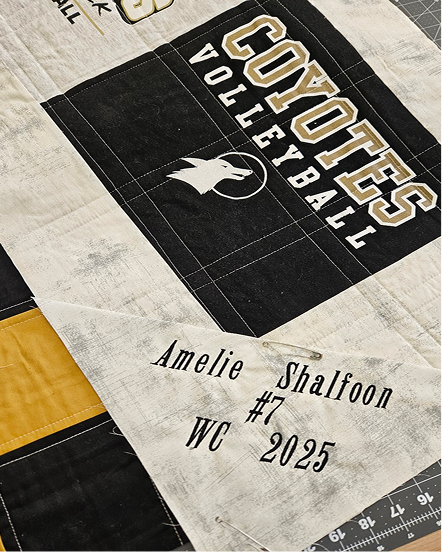
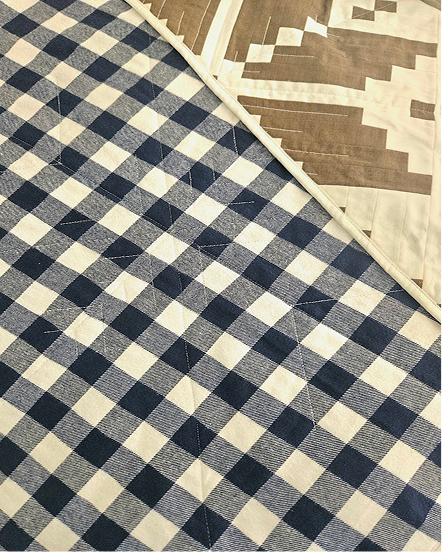
Every seam, every join, every line of quilting is done here, by me. No team, no outsourcing, no second run. When a piece is finished, the composition is retired — I don't reproduce it, and I don't make a version of it in another colourway.
That's the part people feel before they can name it. Slight irregularity in a hand-cut edge. A quilting line that follows the eye instead of a ruler. It is the difference between something made and something manufactured.